Why I Still Shoot Boudoir on Film in 2026
Every session I shoot includes digital files. A modern camera, sharp lenses, reliable autofocus, thousands of frames on a memory card. But alongside that digital setup, I bring two other cameras. One was built in 1975. The other in 1957. Neither has a battery. Neither has autofocus. Neither has a screen on the back to check my work.
People ask me why I bother. The honest answer is that film does something to boudoir photographs that I can’t replicate digitally, not with presets, not with filters, not with AI. The grain, the color, the way skin looks on emulsion. It’s a different medium, and it produces a different kind of image.
Here’s the long version.
My Cameras
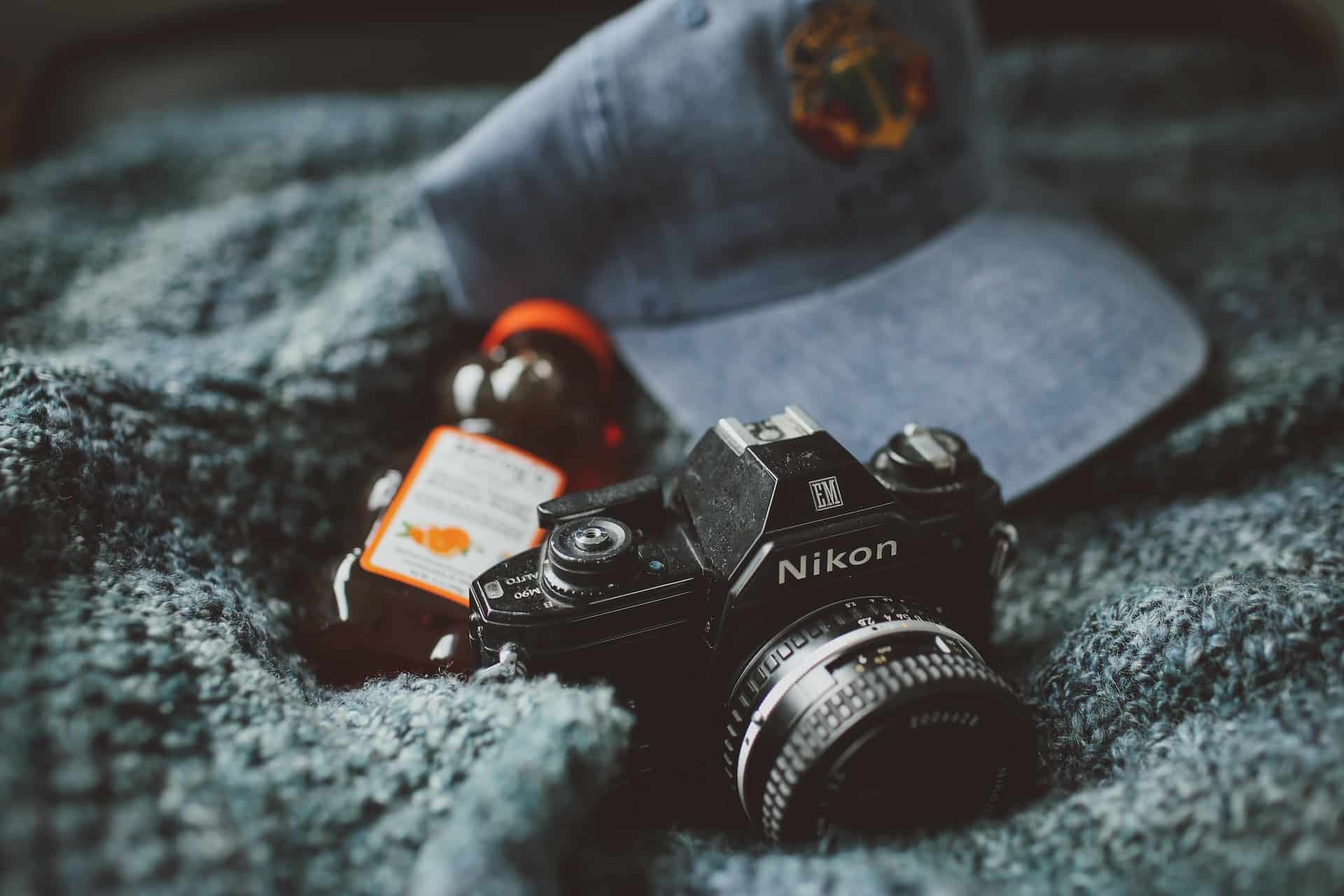
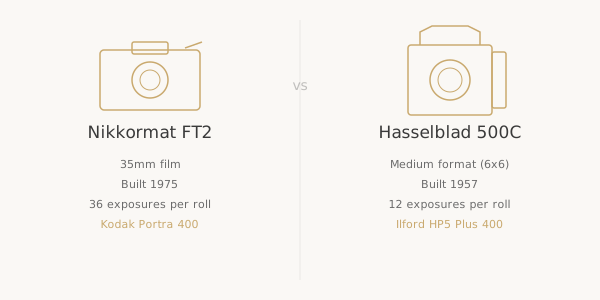
The first is a 1975 Nikkormat FT2. It’s a 35mm SLR, fully mechanical. No batteries, no electronics, no light meter that I trust more than my own eyes. It’s built like a small brick and it sounds like one too. The shutter is loud, definitive. There’s a satisfying click followed by the manual wind lever advancing the film. Everything about it is tactile and deliberate.
I pair it with a 50mm f/1.4 Nikkor lens, which is one of the sharpest lenses Nikon ever made for that mount. Wide open, it produces this soft rendering that falls off into a gentle blur behind the subject. Stopped down, it’s razor sharp. It gives me range.
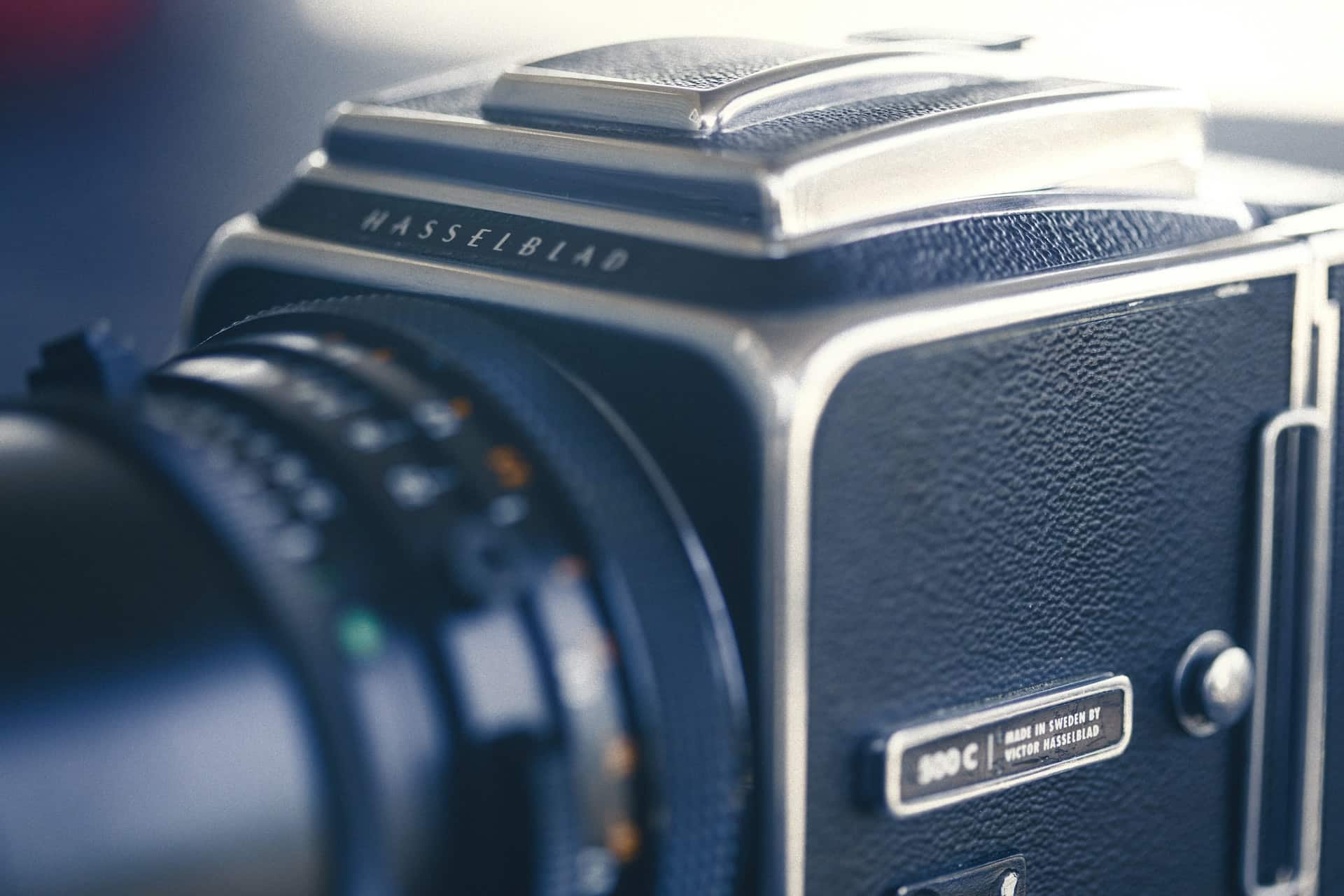
The second is a 1957 Hasselblad 500C. This is a medium format camera, meaning the film frame is significantly larger than 35mm. The negatives are 6x6 centimeters, square, and the level of detail they capture is something you have to see printed to fully understand. The camera uses a waist-level viewfinder, which means I look down into the top of the camera instead of pressing it to my eye. The image on the ground glass is reversed left to right, which took me months to get comfortable with.
The Hasselblad gives me 12 frames per roll. That’s it. Twelve photographs, then I stop, open the back, swap the film magazine, load a new roll, and continue. Each roll costs money to buy and money to develop. There’s no undo.
The Film Stocks I Use
Film choice matters as much as camera choice. Different stocks render skin, color, and contrast in completely different ways.
Kodak Portra 400 is my default for color work. It was designed specifically for portraiture, and it shows. Skin tones come out warm and natural without any correction. It has incredible exposure latitude, meaning I can overexpose it by a stop or two and the highlights just get softer instead of blowing out. For boudoir, where skin is the primary subject, Portra is hard to beat.
Ilford HP5 Plus 400 is my black and white stock. It’s a classic, punchy, contrasty film that responds well to being pushed to 800 or even 1600 in low light. The grain is visible but not distracting. It adds texture to skin and fabric in a way that feels analog and honest. When I want high-contrast, moody frames with deep shadows, HP5 is what I load.
Kodak Ektar 100 is my slow color stock, and I pull it out when the light is right. It has the finest grain of any color negative film currently made, with saturated, vivid color rendition. Golden hour sessions, outdoor locations with warm afternoon light. That’s where Ektar shines. The reds and oranges it produces are something Portra can’t match.
Each stock has a personality. Part of my job is reading the light and the mood of a session and deciding which film belongs in which camera at which moment.
12 Frames Per Roll Changes Everything
Digital cameras let you shoot thousands of frames in a single session. The cost per image is effectively zero. You can fire bursts, bracket exposures, take the same shot 40 times and pick the best one later. It’s efficient. It’s safe. And it changes the way you think about each individual photograph.
With 12 frames per roll on the Hasselblad, there’s no spray and pray. I can’t take 40 versions and sort later. Every time I press the shutter, it costs money and it costs one of my 12 chances. So I wait. I watch the light. I watch the client. I look for the moment where the pose, the expression, and the light all line up, and then I take the shot.
This intentionality shows up in the final images. Film frames from a session tend to be the ones clients choose for prints and albums. There’s a quality to them that comes from the process itself, from the fact that each one was a deliberate decision rather than one option out of hundreds.
Clients notice this during the session too. When I raise the Hasselblad and look down into the viewfinder, the energy in the room shifts. They know this frame counts. They hold the pose a little longer. They breathe a little deeper. The sound of the mirror slap tells them it happened.
How Film Renders Skin
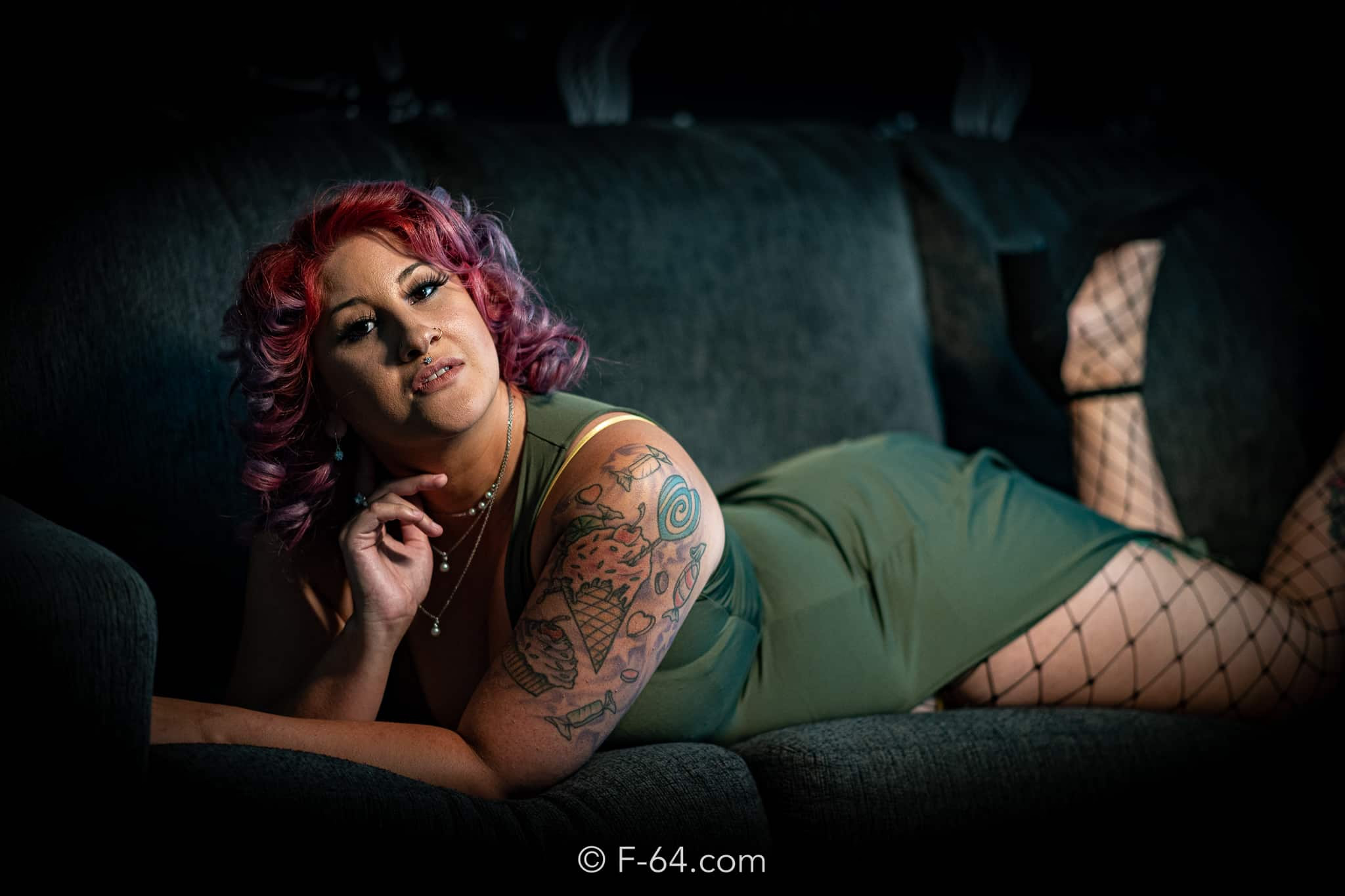
This is the part that’s hardest to explain without seeing it side by side. Film renders skin differently than digital sensors. The highlights roll off gradually instead of clipping hard. Shadows retain detail and warmth instead of going muddy. The tonal curve is organic rather than linear.
On Portra 400, skin looks the way you remember it looking. Warm, alive, dimensional. There’s a quality to the color that sits between realistic and romanticized. It doesn’t look filtered. It looks remembered.
The grain adds something too. Digital images at 100% zoom are smooth, almost too perfect. Film grain introduces a texture that sits over the entire image like a fine mesh. On skin, it softens imperfections without erasing them. It adds a sense of time and materiality to the photograph. These images were made on something physical, silver halide crystals on a strip of plastic, and you can feel that when you look at them.
Black and white on HP5 does something else entirely. It strips away color and forces you to see shape, contrast, and light. Boudoir in black and white becomes more about form. The curve of a spine, the shadow under a collarbone, the way fabric drapes across a hip. Without color, the geometry of the body takes over.
What Clients Get
Every session includes both digital and film images. These are two distinct looks from a single shoot.
The digital files are delivered in a private online gallery, edited and color-corrected. The film is developed and scanned by a professional lab, then delivered alongside the digital work. Clients get the scanned negatives as high-resolution files, ready for printing.
Some clients prefer the digital images. Some fall in love with the film frames. Most end up wanting both, because the two formats complement each other. The digital work is clean and precise. The film work is textured and warm. Together, they tell a more complete story of the session.
For those who want to go deeper into the film side, I offer sessions that are film-focused from start to finish, shot primarily on the Nikkormat and the Hasselblad with digital as a supplement rather than the lead.
The Sound of the Shutter
This is a small thing that turns out not to be small at all.
Modern digital cameras are quiet. Some are nearly silent. The shutter sound, if there is one, is a soft, electronic click. It’s functional but forgettable.
The Nikkormat FT2 sounds like a small door closing. A definitive, mechanical snap followed by the ratcheting sound of the film advance lever pulling the next frame into position. Clients hear it and they know a photograph was made.
The Hasselblad 500C is louder still. The mirror slap is percussive, almost musical. It fills a quiet room. When I fire the Hasselblad, clients react to it. They smile. Sometimes they laugh. One client described it as “the most satisfying sound I’ve ever heard during a photoshoot.” There’s something about that mechanical confirmation, the physical evidence that light just hit film, that makes the moment feel real in a way a silent digital shutter can’t match.
It’s not nostalgia. It’s presence. The cameras demand attention, from me and from the person I’m photographing. That attention shows up in the work.
Ready to See What Film Can Do?
If film boudoir photography sounds like your kind of session, I’d love to show you what these cameras produce. You can see examples in the film gallery, read more about my approach, or reach out directly to start planning your session.