Tahoe Sunset Rocks
Some sessions you remember because of the client. Some you remember because of the light. This one I remember because of both.
The drive from Sacramento to South Lake Tahoe takes about two hours if you don’t stop. I always stop. There’s a point on Highway 50, just past Placerville, where the oaks give way to pines and the air changes. You can feel the elevation in your ears. By the time you crest Echo Summit and the lake appears below you, flat and impossibly blue, you’ve already left the valley behind in every way that matters.
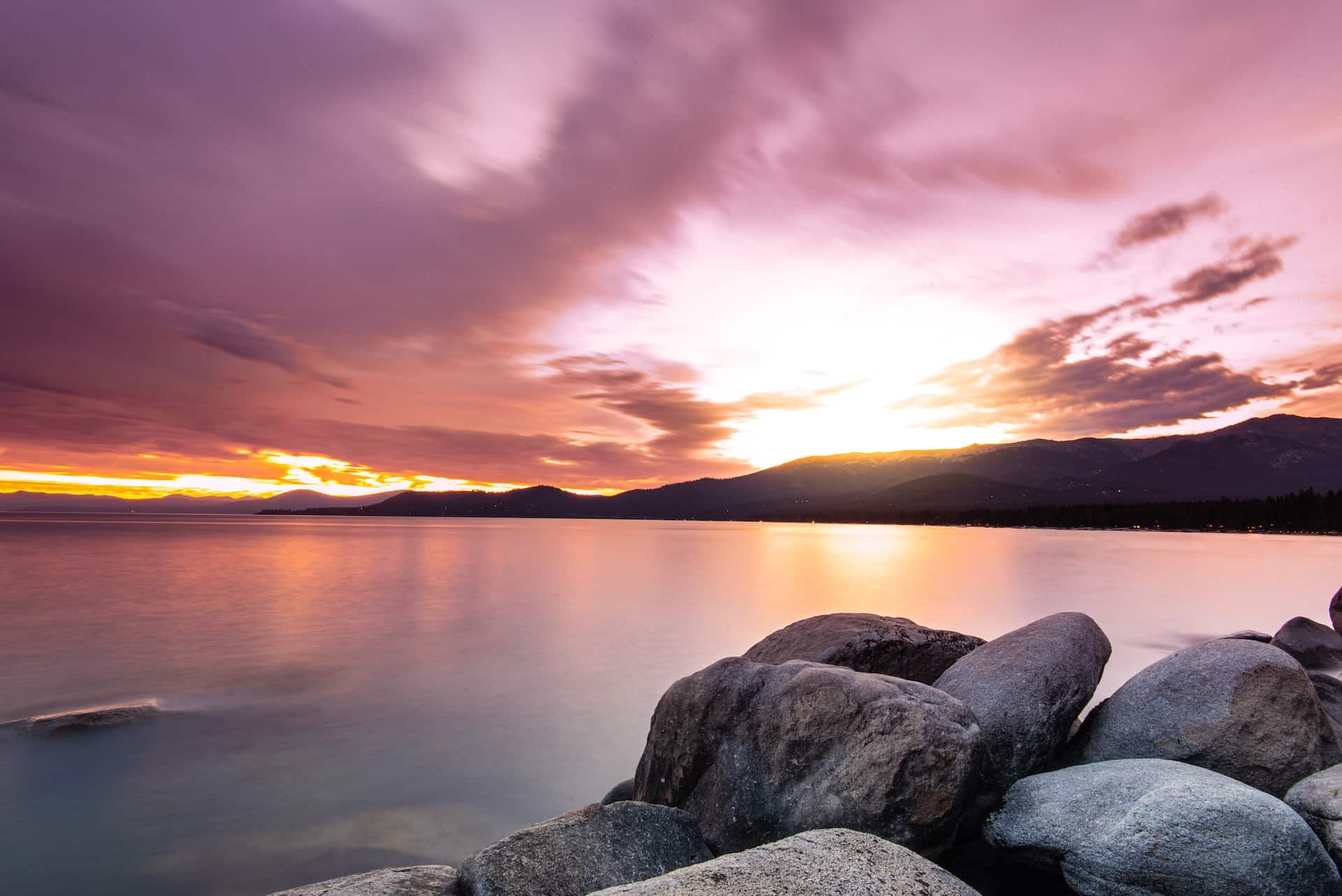
I arrived three hours before the session. That’s early, even for me. But location scouting at Tahoe is different than scouting in Sacramento. The light at elevation behaves differently. It stays golden longer, the air is drier and thinner, and the granite reflects it back in ways that valley soil never does. I needed to find the exact spot where the sun would set behind the western mountains and plan the entire session around those 45 minutes of changing light.
The Client Flew In
This was a destination session. The client booked from out of state, flew into Reno, and drove over the pass to meet me at the lake. That’s the kind of commitment that tells you everything about what the session means to someone. She didn’t pick Tahoe because it was convenient. She picked it because she wanted her images to feel like something, to carry the weight of a place that mattered.
Destination boudoir is a different experience than shooting locally. The travel, the unfamiliar landscape, the feeling of being somewhere you don’t go every day. All of it raises the stakes in a good way. There’s an energy to it. You’re not fitting a session between errands. You’re making a trip for this. And that changes how you show up.
We met at the location an hour before sunset. I had already walked the rocks and marked the spots. Three setups, each one timed to a different stage of the light.
Golden to Pink to Blue
The first setup caught the last full golden light. Direct sun, low angle, warm on skin and granite alike. At Tahoe, golden hour light has a clarity to it that you don’t get in the valley. Sacramento golden hour is filtered through dust and agricultural haze. Tahoe golden hour is clean. The light at 6,200 feet travels through less atmosphere, and it shows. Colors are sharper. Shadows have harder edges. Skin glows instead of just warming.
We shot fast during this phase. The good light at this angle lasts maybe 15 minutes before the sun drops behind the ridge. I was on digital for speed, shooting wide to capture the rocks and the water and the last of the direct light all in one frame.
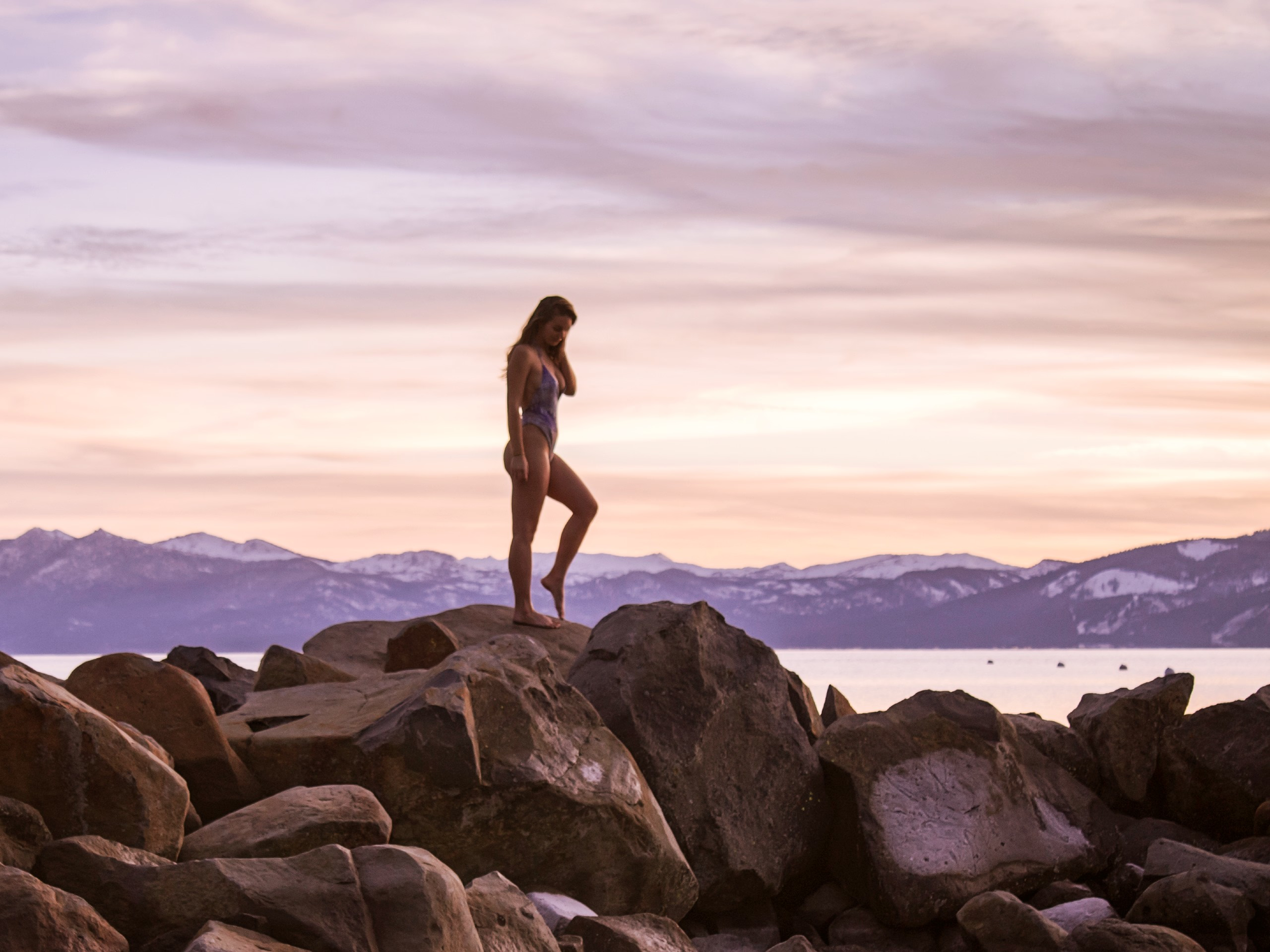
The second setup was the transition. The sun was behind the mountains but the sky was still lit. This is when everything goes pink. The granite, which had been warm gold five minutes earlier, turned rose. The water picked up the color of the sky and reflected it back. This is the light that most people miss because they pack up after the sun disappears. But the 20 minutes after sunset are often better than the 20 minutes before it.
I switched to the Hasselblad for this phase. Loaded with Kodak Portra 400, which handles this kind of fading light with grace. Portra has a warmth built into its color science that digital white balance can approximate but never quite match. In transitional light like this, where the color temperature is shifting minute by minute, Portra does something that I can only describe as forgiving. It holds the warmth even as the light cools.
Shooting medium format film at dusk is a deliberate choice. Each frame costs about $2 and takes 15 seconds to compose. There are 12 exposures on a roll. You cannot spray and pray. Every frame has to count. I made seven exposures during this phase and kept five. That’s a good ratio for film.
The Moment
The third setup was the last light. The sky had gone from pink to a deep blue-purple, and there was a band of orange still clinging to the horizon behind the mountains. The lake was dark except where it caught the last of the color. The granite was cool to the touch.
There was a moment, and this is the one I keep coming back to, when the last light caught the water and the granite at the same time. The rocks were glowing faintly with the reflected sky, and the lake behind was doing the same thing, and my client was standing between the two with her hands at her sides. Not posing. Just standing there, looking at the water.
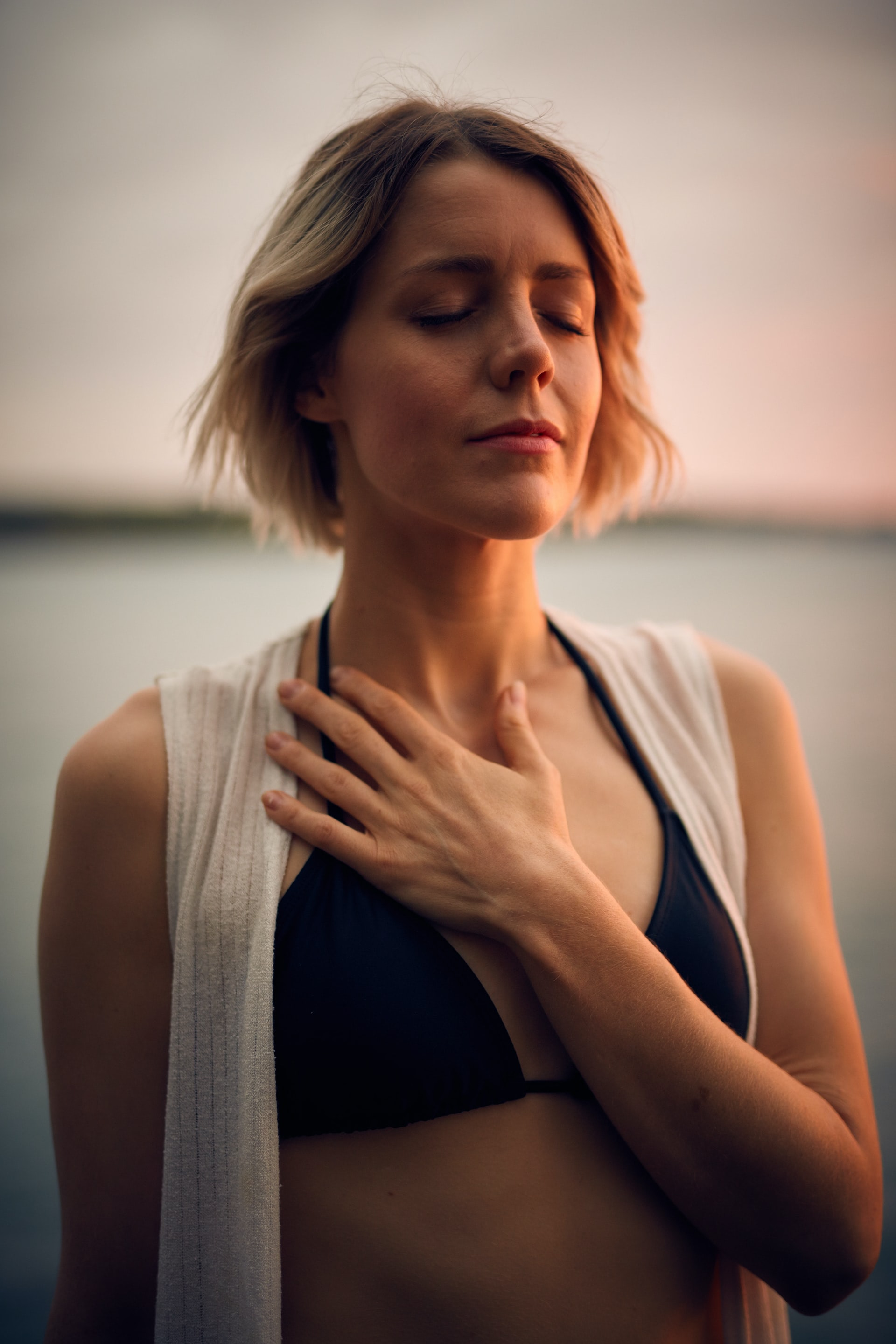
I made one frame on the Hasselblad. Then the light was gone.
Why Tahoe
I shoot boudoir in a lot of locations around Sacramento and Northern California. Hotels, Airbnbs, private homes, outdoor spaces. Each one has something to offer. But Tahoe is different.
The elevation changes the light. The granite gives you a texture that no interior wall can match. The scale of the landscape, mountains and water and sky, puts a human figure into a context that feels larger than a single photograph. And the drive itself, two hours of climbing out of the valley and into the mountains, creates a separation between daily life and the session that makes the whole experience feel more intentional.
If you’re thinking about a destination boudoir session, Tahoe is one of the best locations I’ve worked. You can browse more from this area in the Lake Tahoe gallery.
And if you want to talk about planning something like this, whether at Tahoe or somewhere else entirely, reach out. I’ll bring the cameras. You just have to show up.