Do I Need to Know How to Pose?
No. That’s my job.
I say this in every consultation, at the start of every session, and apparently I need to say it here too: you do not need to practice poses in your mirror, study Pinterest boards, or rehearse angles. In over 105 boudoir sessions and 31,000+ photographs, I have never once expected a client to show up knowing what to do with their body in front of a camera.
You know what you need to bring? Yourself. That’s the whole list.
The reason this question comes up so often is that most people’s experience with being photographed is awkward. Someone points a camera at you, you freeze, you do the thing with your hand on your hip that you saw someone do once, and the result looks stiff. Boudoir doesn’t work that way because I don’t point a camera and wait. I direct every single frame.
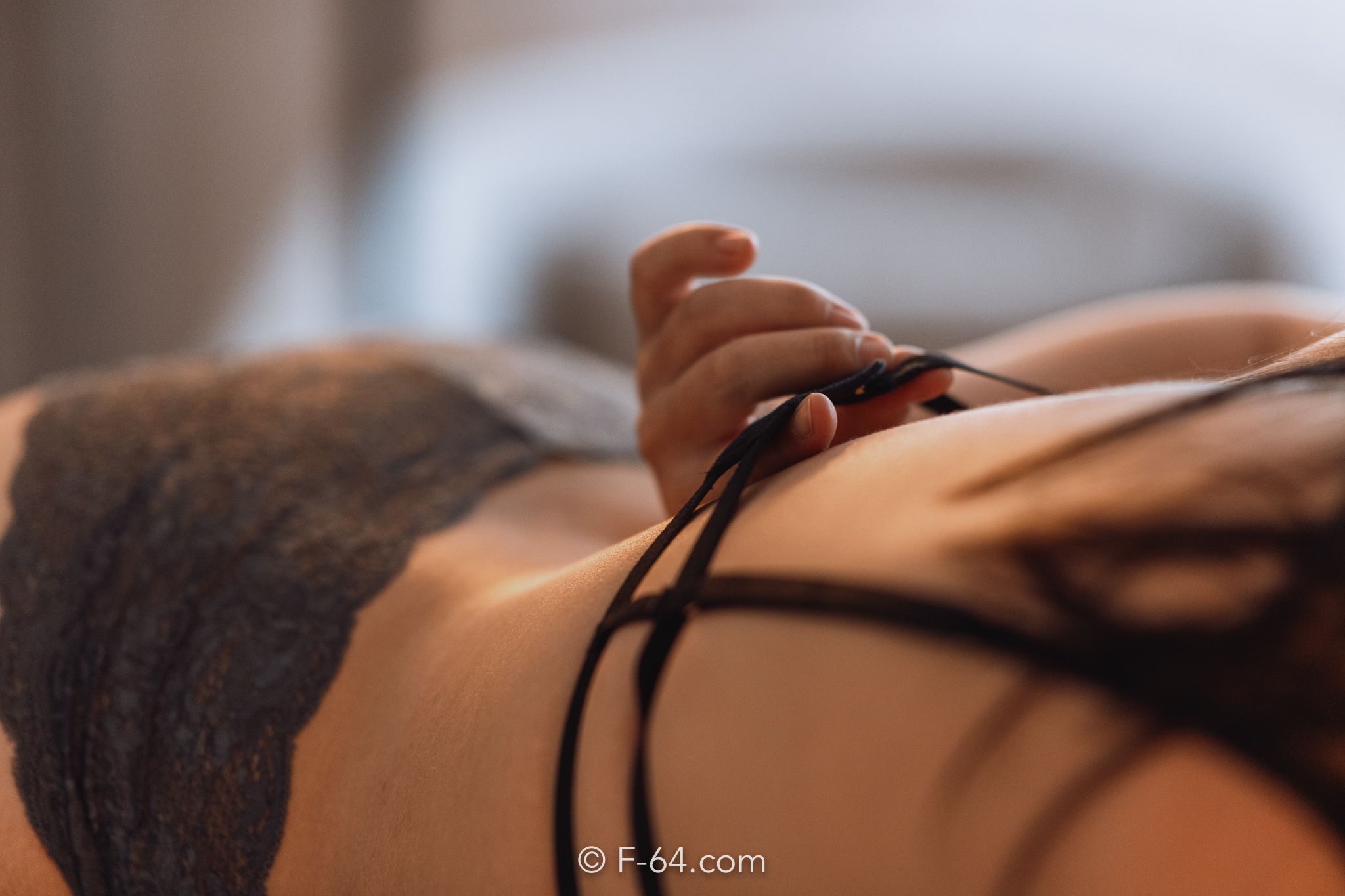
How I Direct Poses
Here’s what it actually sounds like during a session:
“Turn your right shoulder toward me. Now drop your chin just a little. Relax your fingers. Take a breath in, and on the exhale, let your shoulders drop.”
That’s a real sequence from a real session. It takes about eight seconds. The client doesn’t need to think about what looks good. They just follow the directions, and I watch through the viewfinder until the light, the angle, and the expression all line up.
I direct with specifics. Not “look natural” (meaningless) or “be sexy” (useless). I tell you where to put your hands. I tell you which way to shift your weight. I tell you when to close your eyes and when to look at me. The specificity is what makes it work. When you know exactly what to do, the anxiety of figuring it out on your own disappears.
I also shoot a lot of frames. On digital, I might capture 400 to 600 images in a two-hour session. On the Hasselblad 500C, my 1957 medium format camera, every roll gives me 12 shots, and I choose each one carefully. Between the digital rapid-fire and the deliberate film work, we end up with variety. Tiny adjustments between frames, a shift of the hand, a tilt of the head, often produce the best images.
The full rundown of how sessions flow is on the experience page.
Poses That Work for Every Body Type
I don’t have a set of poses for “curvy” clients and a different set for “petite” clients. That approach is reductive and it doesn’t reflect how bodies actually work. What I do have is a set of principles that make everyone look like themselves in the best possible light.
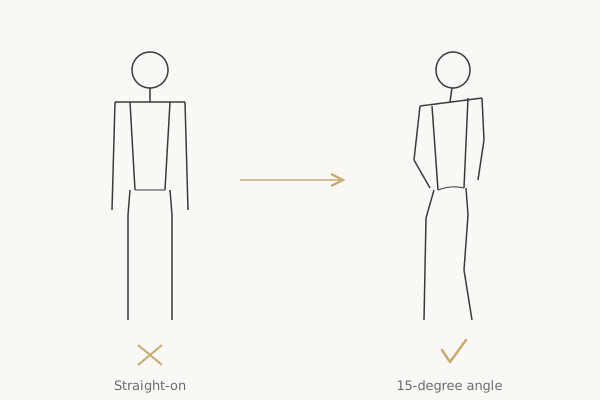
Angles over straight-on. Turning the body even 15 degrees from the camera creates depth and shape. Straight-on shots have their place, but angled positions are almost always more flattering and more interesting.
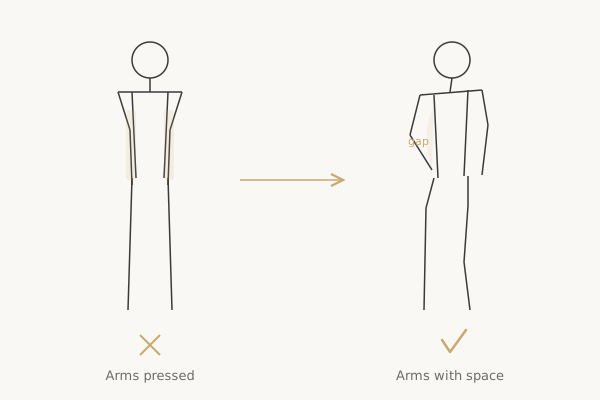
Space between the arm and the body. When your arm presses flat against your torso, it spreads and looks wider than it is. A small gap, even an inch, defines the waist and creates a cleaner line. I’ll tell you when and how to create that gap.
Elongation. Pointed toes, extended legs, stretched arms. Length in a photograph reads as grace. This doesn’t require flexibility. It just requires me telling you to point your toes, which I will.
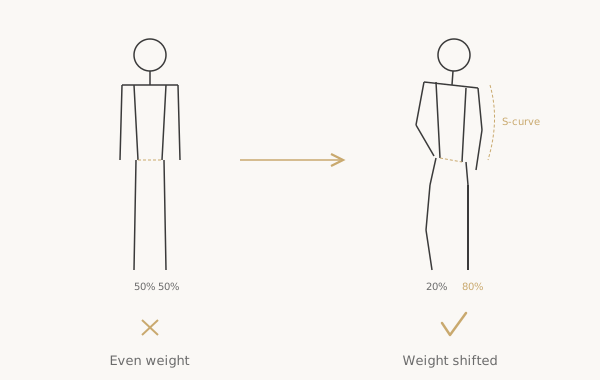
Weight distribution. Shifting your weight to one hip, bending one knee, placing more pressure on one foot than the other. These small shifts create curves and asymmetry that photographs love. I direct all of this in the moment.
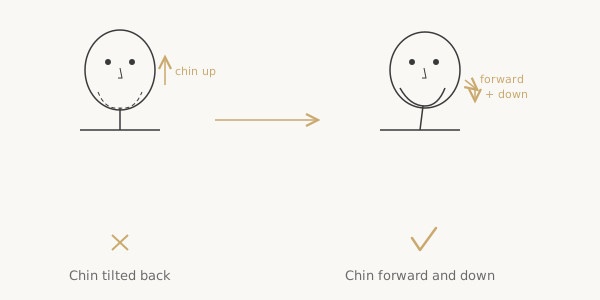
Chin position. Pushing the chin slightly forward and down tightens the jawline and eliminates the angle that everyone hates in selfies. This single adjustment changes more photos than any other.
Standing, Seated, and Lying Down
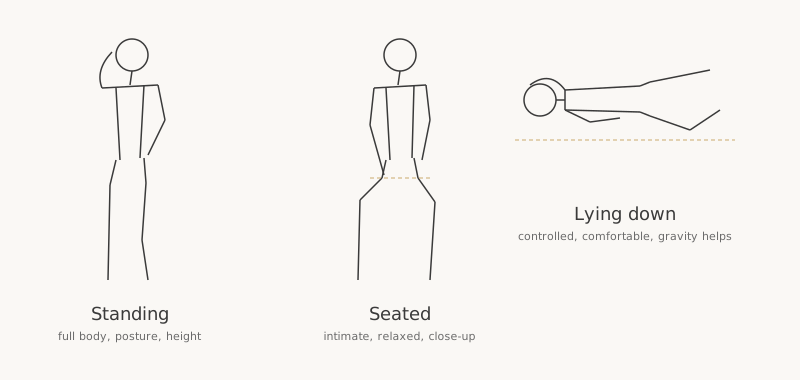
Every boudoir session moves through three foundational positions. Within each, there are dozens of variations, but the base categories are simple.
Standing. We usually start here. Standing poses by a window, against a wall, or in a doorway are great for full-body shots. They emphasize height and posture, and the movement between standing poses feels natural. Walk toward me, turn around, lean against the frame.
Seated. A chair, the edge of a bed, a windowsill. Seated poses are more relaxed and tend to feel intimate. They’re good for close-up work and for moments when I want the photograph to feel quieter.
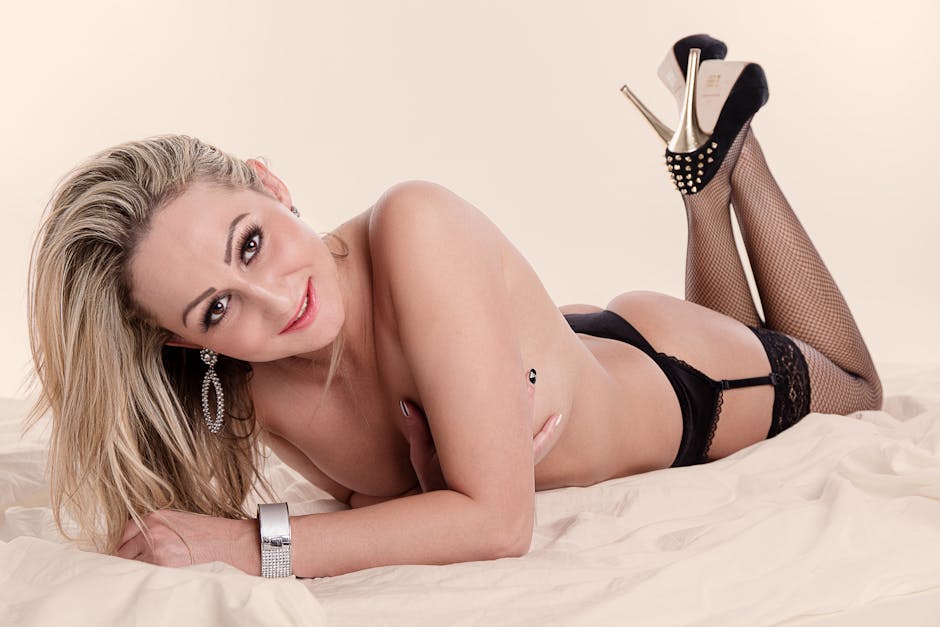
Lying down. On a bed, on the floor, on a blanket outdoors. Lying-down poses give me the most control over how the body is arranged in the frame. They’re also where a lot of people feel most comfortable because there’s less concern about how they’re “holding” their body. Gravity does some of the work.
We’ll move between all three during your session. Some clients prefer one over the others, and that’s fine. I adjust based on what’s working.
What About My “Bad Side”?
There isn’t one.
I understand why people believe they have one. You’ve seen enough photos of yourself taken from one angle at arm’s length to decide that the left side is better than the right, or that you can only be photographed from above. Those beliefs come from bad lighting and bad angles in uncontrolled situations (phone cameras at parties, for example).
In a boudoir session, I control the light. I control the angle. I control which lens I’m using and how far away I’m standing. The “bad side” that shows up in a snapshot doesn’t exist when a photographer is working the light and directing the pose.
That said, if you feel strongly about it, tell me. I’m not going to argue with you during your session. I’ll photograph your preferred side first, build your confidence, and then (if you’re open to it) quietly shoot from the other side. More often than not, those end up being some of your favorite images.
Movement Over Stillness
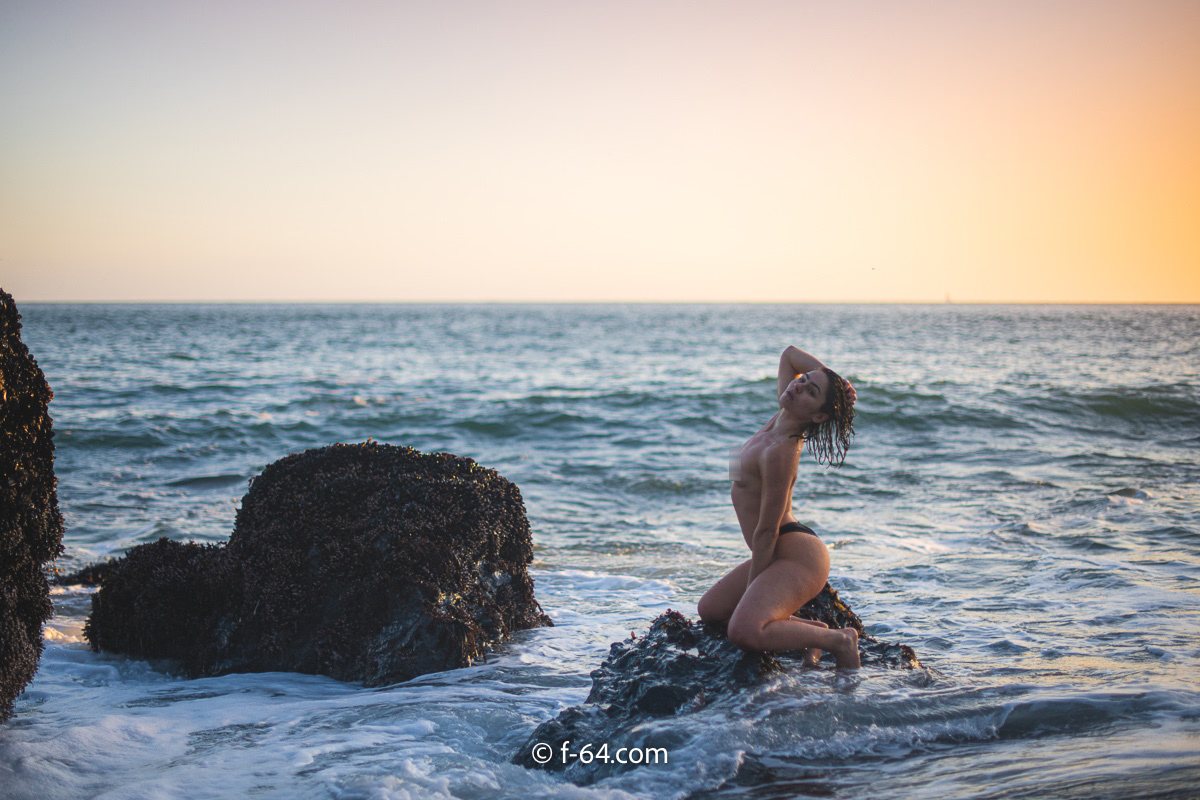
Some of the best boudoir photographs I’ve taken weren’t posed at all. They happened in between poses, during the transition from one position to another.
Walking toward the camera. Turning to look over a shoulder. Adjusting a strap. Laughing at something I said. Pulling a sheet up. Sitting down. Standing up.
I keep shooting during these moments because movement creates a quality that static poses can’t replicate. The hair shifts, the fabric drapes differently, the expression is unguarded. I direct plenty of still, composed images too, but the in-between frames are often where the real magic lives.
This is also why I tell every client to bring music they like. When a song you love is playing and you’re mid-laugh or mid-hair-flip, you’re not thinking about posing. You’re just existing in your body. That’s exactly what I’m photographing.
Check the prep guide for more on how to prepare for your session, including outfit planning and what to do the day before.
Stop Worrying About Posing
If you take one thing from this post, let it be this: posing is not your problem to solve. You hire a boudoir photographer specifically so you don’t have to figure this out alone. My job is to see your body, understand how light falls on it, and direct you into positions that look and feel right. Your job is to show up and trust the process.
Book a session and I’ll handle the rest.
Some images on this page are stock photography by Pexels photographers. All session images are original F64 work.